

How Closelink combines demand forecasting, operational visibility, and supplier collaboration into one proactive procurement workflow.
The Importance of Operational Resilience in Volatile Markets
The marine lubricant environment is currently shaped by supply volatility, operational uncertainty, and regional constraints. Recent geopolitical disruptions, including tensions surrounding the Strait of Hormuz, have once again demonstrated how quickly supply conditions can shift across global shipping markets. At the same time, fluctuating port availability, pricing pressure, and tighter supplier capacities continue to challenge procurement teams to secure supply while controlling costs and operational risk.
In this environment, shipping companies increasingly require earlier visibility into fleet demand, stronger forecasting capabilities, and closer coordination between vessels, buyers, and suppliers. The ability to anticipate demand, evaluate alternatives proactively, and make tactical decisions earlier in the procurement cycle has become a critical operational advantage.
Closelink supports this shift by combining operational vessel data, demand forecasting, supplier collaboration, and procurement visibility into one connected workflow.
Continuous Demand Visibility
At the center of this approach is the Demand Overview feature. Instead of managing lubricant demand vessel by vessel — or requisition by requisition — in disconnected workflows, procurement teams gain an aggregated view of upcoming fleet demand across products, vessels, and time horizons. This enables buyers to identify future procurement requirements before they become urgent operational issues, which is particularly valuable during periods of supply disruption or regional constraints.
Several connected capabilities further strengthen fleet-wide visibility and improve forecasting accuracy:
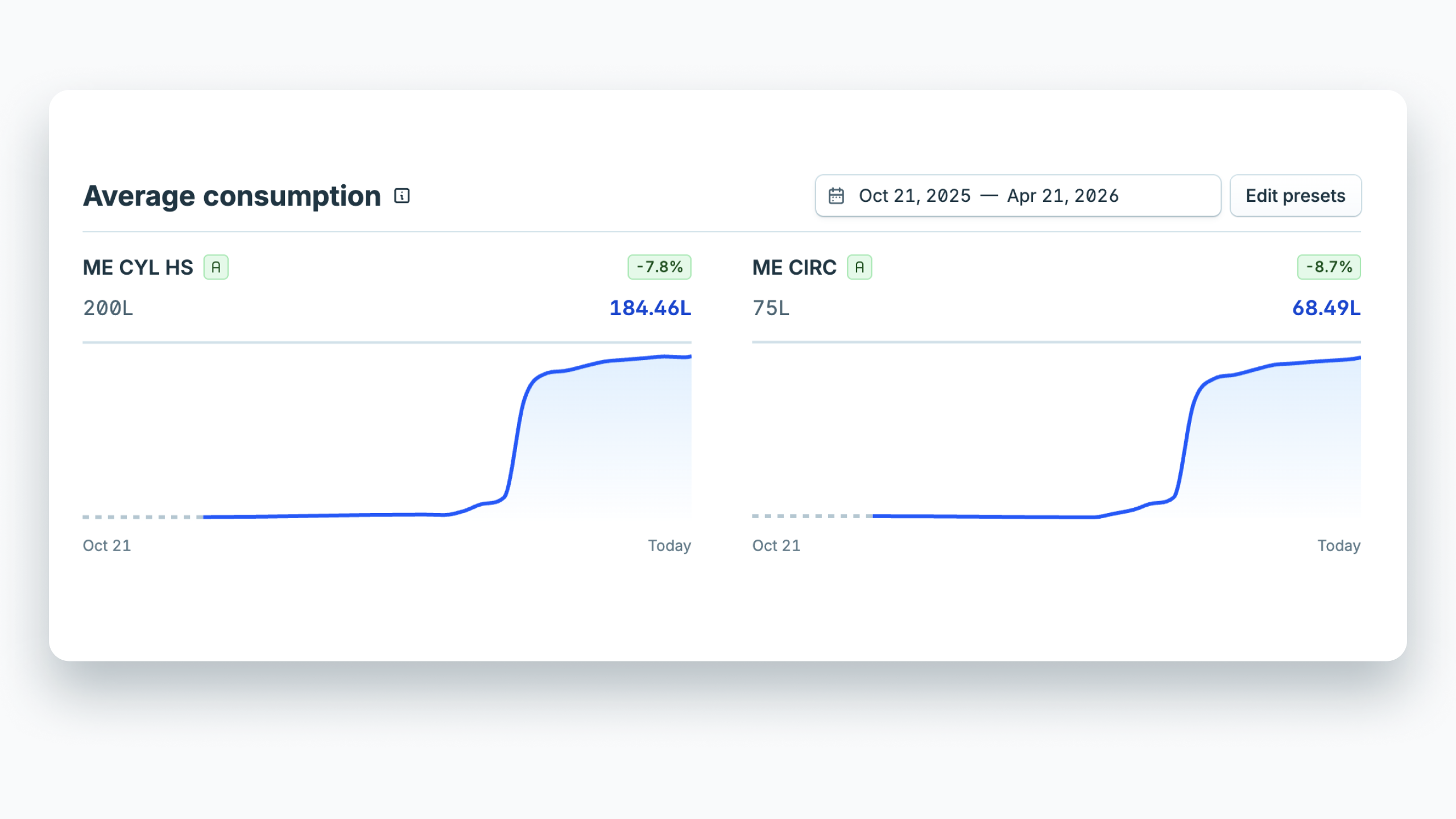
Calculated Average Consumption
Closelink continuously tracks and qualifies lubricant consumption patterns on a vessel and product level. By automatically establishing more reliable consumption curves, procurement teams can forecast future demand more accurately without relying on static assumptions or manually maintained spreadsheets.
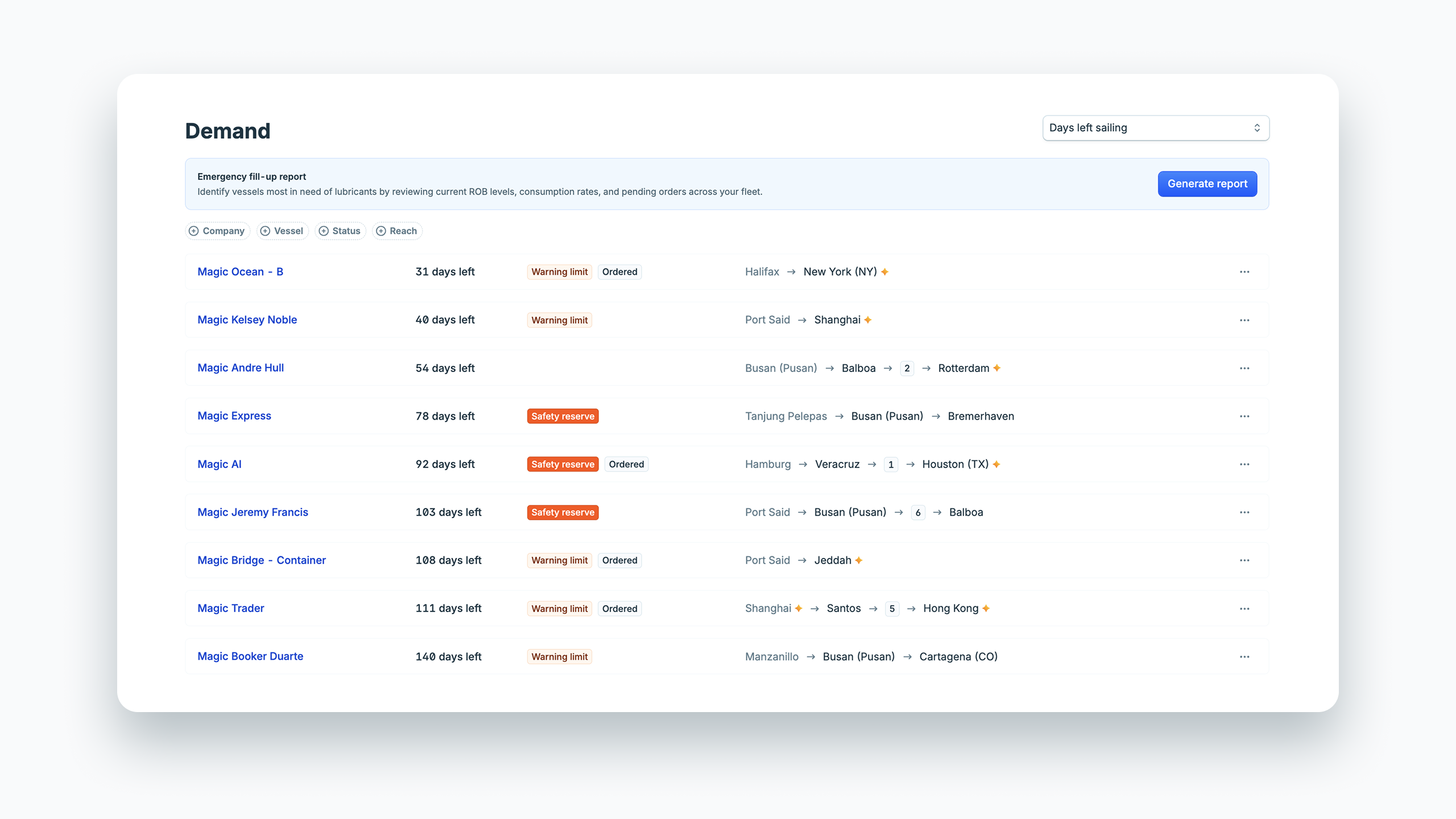
Reach Calculation - Days Left Sailing
Integrated reach calculations provide continuous visibility into how many sailing days remain per product and vessel. By combining noon reporting data, tank information, safety reserve limits, and vessel-specific consumption patterns, buyers gain a clearer understanding of vessel stock levels and potential supply vulnerabilities. This helps procurement teams prioritize actions earlier and reduce operational risk before issues escalate.
Automated Email Alerts
Automated Email Alerts ensure that critical demand developments, supply risks, or procurement opportunities are surfaced immediately to relevant stakeholders. Instead of relying on manual monitoring, procurement teams receive timely notifications that support earlier decision-making and better cross-department coordination.
Vessel Schedule Sharing
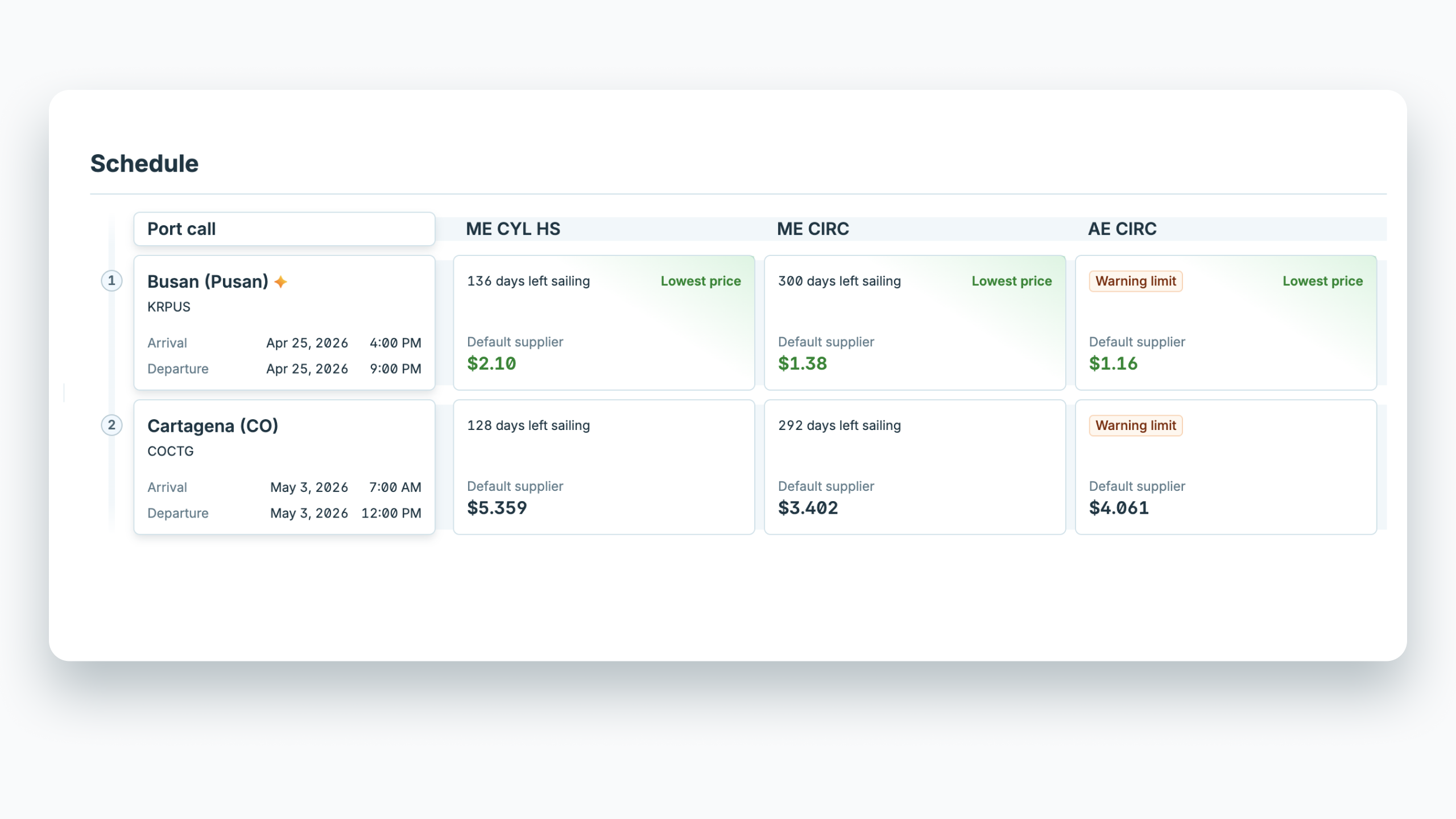
In today’s market, procurement flexibility has become increasingly important as supply availability can shift rapidly between ports. With Vessel Schedule Sharing, procurement teams can share vessel schedules and upcoming port calls directly with suppliers during the enquiry process, giving suppliers earlier visibility into sailing plans and enabling them to propose alternative supply locations and more feasible solutions.
This creates a more collaborative procurement process where suppliers can actively support supply optimization instead of only responding to isolated enquiries. Particularly during periods of low stock availability or regional supply constraints, this additional visibility helps buyers improve supply resilience while identifying further cost optimization opportunities.
Multiple Offers per Enquiry
Multiple Offers per Enquiry further expands sourcing flexibility by allowing suppliers to submit several proposals within a single enquiry process. Buyers can compare different ports, delivery scenarios, or equivalent product alternatives within one aggregated view.
This reflects the reality of today’s procurement environment, where the optimal solution is often no longer a single fixed option. By enabling suppliers to structure multiple commercial and operational scenarios within one workflow, procurement teams can make faster and more informed sourcing decisions.
Enabling More Resilient Procurement Operations
Together, these capabilities support a more proactive procurement setup that improves both operational resilience and commercial performance. Better forecasting reduces emergency procurement situations, while improved supplier collaboration increases sourcing flexibility and supply visibility.
At the same time, vessel-specific consumption behavior, safety reserve requirements, and port call information remain continuously connected to procurement decisions. The result is a procurement operation that is more agile, transparent, and better prepared to navigate ongoing market uncertainty — both now and in the future.
